
Cycle groups are pumped at law changes coming into effect today that aim to improve safety for non motorists on the roads and footpaths.
But walking advocates say allowing children and their caregivers to ride on pavements will increase the risks for society's most vulnerable.
In July the government touted the new laws as "common sense" changes.
They allowed children under 12 years old - and their caregivers - to ride on the footpath.
Meanwhile, scooter riders were now allowed on cycle lanes, and motorists would be legally required to give way to buses as they pulled back into traffic.
The previous recommendation for motorists to give one metre of space when passing cyclists had also been upgraded to a mandatory one and half metres about cyclists, horses and other road users.
Christchurch musician Bryony Matthews suffered a significant head injury when she fell from an E-scooter after clipping a pedestrian who stepped into her path in 2023.
Three years on she still dealt with chronic fatigue, memory lapses and tinnitus.
She said the law change was unlikely to change dangerous mindsets behind the wheel.
"There's so many cars that just think bikes are annoying, forgetting that they're sharing the road with many, many other people.
"They get in their car, they close the door and they're in their own little bubble and then the road is theirs," she said.
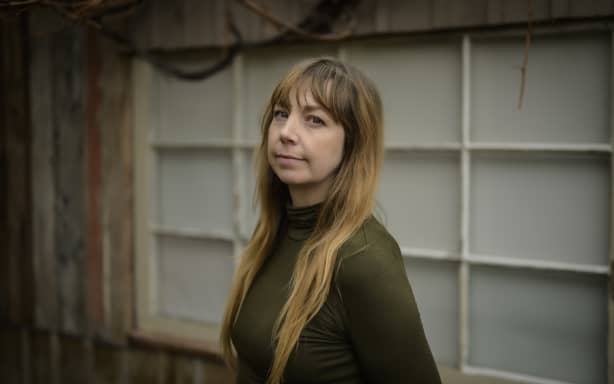
Christchurch musician Bryony Matthews suffered a significant head injury when she crashed an E-scooter in 2023.
Marc Wilson
"You really notice it when you go overseas to different countries where there's more public transport, more cyclists and more people that are not just in their cars," Matthews said.
These days Matthews stuck with her bike or car.
But she said scooter companies needed to do more to ensure people weren't taking unnecessary risks - such as multiple riders in traffic.
"You're literally going 23km/h. I watched some people fly off [a scooter] two days ago and it freaked me out," Matthews said.
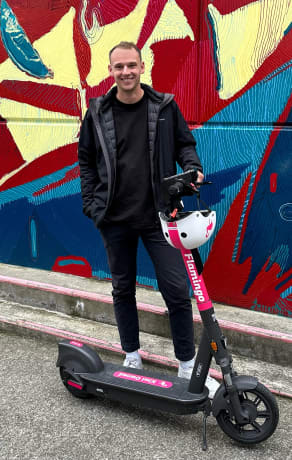
Flamingo co-founder Jacksen Love says his company will be promoting awareness about the new rules through their app and social media.
Supplied
The co-founder and chief executive of Flamingo scooters, Jacksen Love, said his company would be running an awareness campaign on social media and through their app to encourage riders to be safe on the streets.
"If there's no cycle lane and you're a confident rider then you are still allowed to use the road but - for our first timers and riders who are new to E-scooters - the footpath is still an option which can provide a more easy introduction to learning to ride.
"It's just making sure that when we are using the footpath we're giving way to pedestrians and taking care of those around us," Love said.
But Living Streets Aotearoa's Chris Teo-Sherrell said he worried the change to allow under 12 year olds to ride on the pavement could put vulnerable pedestrians or mobility device users at risk.
"The amount of traffic and the size of the vehicles is much, much bigger than it was - so things have changed. That contributes to the perception that roads are not safe. But you don't make them safer by putting everybody onto the footpath because that compromises the safety of the people for whom footpaths are actually intended," Teo-Sherrell said.
Cycle Action Network's Patrick Morgan said the change meant young riders could benefit from supervision and ride on the footpath.
That would help them learn safety and etiquette without deadly consequences, he said.
"There's no reservoir of children who are currently not riding at all, or who are riding on the road, who will switch to riding on footpaths.
"It's hard to make a case that there will be a big increase in kids biking on footpaths. Precisely because most people are unaware that it's not legal or because - despite the law - there's no way they're going to let their kid ride on the road," Morgan said.
Worker First Union represented bus drivers from almost all major bus companies across the country.
Deputy secretary Anita Rosentreter said she was pleased that the courtesy of allowing stopped buses to re-enter traffic was now enshrined in law.
But she said the wider passing requirement could be challenging in some urban settings.
She said all road users would be safer if motorists exercised a little more understanding on Aotearoa's roads.
"If you see yourself coming up to a narrowing part of the road - and you've got cars parked on either side and there's a cyclist there - we'd all probably benefit from remembering we can actually slow down and wait. A little patience goes a long way," Rosentreter said.

Bryony Matthews says the new road rules are unlikely to change drivers mindsets that put other road users at risk.
James Tempero
Transport minister Chris Bishop said the new changes would strike "the right balance" for road users.
"Everyone has a responsibility to be considerate and safe.
"People riding on footpaths must give way to pedestrians and travel at a safe speed, while drivers must also meet their obligations around pedestrians and cyclists.
"I believe this approach strikes the right balance between safety, supervision, and practical use of our existing transport infrastructure," Bishop said.


0 commentaires:
Enregistrer un commentaire