.png)
Creating your own self-aerating compost tea brewer is a fantastic way to boost the health of your garden soil and plants. Compost tea is a nutrient-rich liquid that can enhance plant growth and improve soil structure, delivering essential nutrients directly to plant roots. By building this simple yet effective brewer, you can produce your own compost tea using minimal materials and effort. This DIY is perfect for gardeners looking to recycle organic waste into a potent fertilizer, particularly useful in spring and fall when plants require extra nutrients for growth or winter preparation.
This DIY fits seamlessly into a rustic or cottage-style garden, where natural and repurposed materials are favored. Ideal for vegetable patches, herb gardens, or flower borders, the self-aerating compost tea brewer can be placed near raised beds or tucked away in a garden corner. It supports a wide variety of plant types, from tomatoes and cucumbers to roses and lavender, by providing them with an organic nutrient boost. Its simple design complements the natural beauty of any garden setting, offering both functionality and a touch of DIY charm.
3-Material Self-Aerating Compost Tea Brewer
Materials
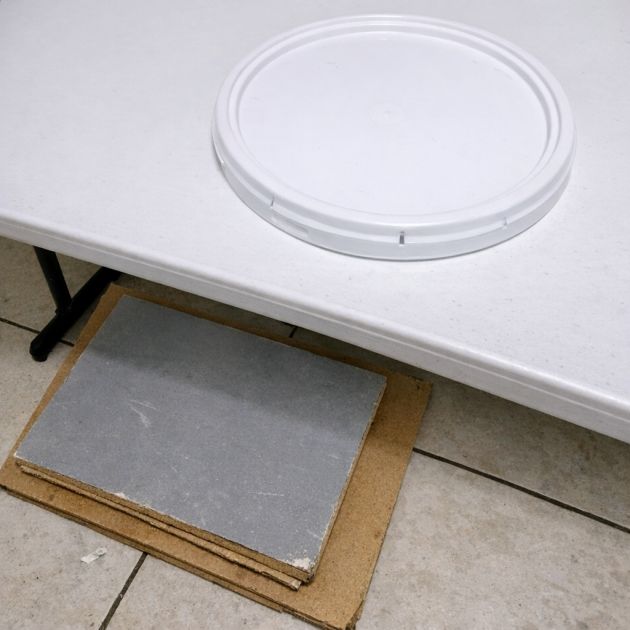
1 White Plastic Bucket Lid
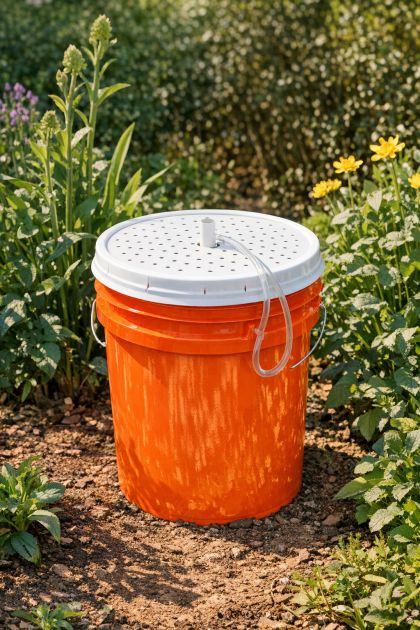
1 5-Gallon Orange Bucket
1 Set of Drill Bits
1 Electric Drill
Directions
Place the white plastic bucket lid on a stable, flat surface like cement.
Using the electric drill and a small drill bit, carefully drill multiple small holes evenly spaced across the surface of the bucket lid. These holes will allow air to circulate through the compost tea.
Stack the drilled lid securely on the orange 5-gallon bucket.
Ensure the lid fits snugly to prevent any large debris from entering while allowing air circulation.
Fill the bucket with water and add compost materials, such as vegetable scraps or garden clippings, to steep and create the tea.
Variations & Tips
For a more durable version, consider using a metal drill bit to create larger holes and a heavier-duty bucket lid if needed. You can swap the orange bucket for a more neutral color to blend better with a modern garden aesthetic. For those in cooler climates, placing the brewer in a greenhouse or using a black bucket can help maintain warmer temperatures for faster brewing. Adapt the compost materials based on available organic waste and specific plant needs, such as using more nitrogen-rich materials for leafy greens or phosphorus-rich materials for flowering plants.


0 commentaires:
Enregistrer un commentaire