Top Ad 728x90

dimanche 4 octobre 2026

Cycle groups welcome road rule changes but walking advocates cite increased risk

by


Cycle groups are pumped at law changes coming into effect today that aim to improve safety for non motorists on the roads and footpaths.

But walking advocates say allowing children and their caregivers to ride on pavements will increase the risks for society's most vulnerable.

In July the government touted the new laws as "common sense" changes.

They allowed children under 12 years old - and their caregivers - to ride on the footpath.

Meanwhile, scooter riders were now allowed on cycle lanes, and motorists would be legally required to give way to buses as they pulled back into traffic.

The previous recommendation for motorists to give one metre of space when passing cyclists had also been upgraded to a mandatory one and half metres about cyclists, horses and other road users.

Christchurch musician Bryony Matthews suffered a significant head injury when she fell from an E-scooter after clipping a pedestrian who stepped into her path in 2023.

Three years on she still dealt with chronic fatigue, memory lapses and tinnitus.

She said the law change was unlikely to change dangerous mindsets behind the wheel.

"There's so many cars that just think bikes are annoying, forgetting that they're sharing the road with many, many other people.

"They get in their car, they close the door and they're in their own little bubble and then the road is theirs," she said.
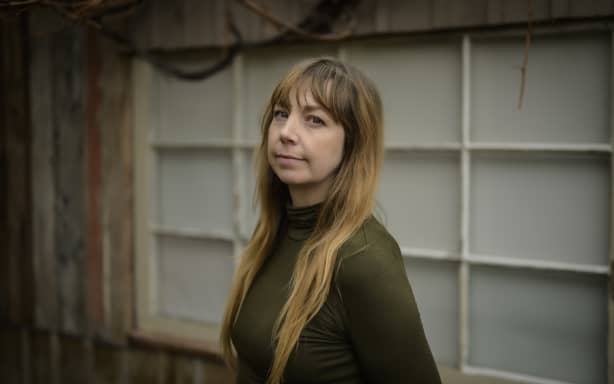
Christchurch musician Bryony Matthews suffered a significant head injury when she crashed an E-scooter in 2023. She says the new road rules are unlikely to change drivers mindsets that put other road users at risk.

Christchurch musician Bryony Matthews suffered a significant head injury when she crashed an E-scooter in 2023.

Marc Wilson

"You really notice it when you go overseas to different countries where there's more public transport, more cyclists and more people that are not just in their cars," Matthews said.

These days Matthews stuck with her bike or car.

But she said scooter companies needed to do more to ensure people weren't taking unnecessary risks - such as multiple riders in traffic.

"You're literally going 23km/h. I watched some people fly off [a scooter] two days ago and it freaked me out," Matthews said.

Flamingo co-founder Jacksen Love says his company will be promoting awareness about the new rules through their app and social media.

Flamingo co-founder Jacksen Love says his company will be promoting awareness about the new rules through their app and social media.

Supplied

The co-founder and chief executive of Flamingo scooters, Jacksen Love, said his company would be running an awareness campaign on social media and through their app to encourage riders to be safe on the streets.

"If there's no cycle lane and you're a confident rider then you are still allowed to use the road but - for our first timers and riders who are new to E-scooters - the footpath is still an option which can provide a more easy introduction to learning to ride.

"It's just making sure that when we are using the footpath we're giving way to pedestrians and taking care of those around us," Love said.

But Living Streets Aotearoa's Chris Teo-Sherrell said he worried the change to allow under 12 year olds to ride on the pavement could put vulnerable pedestrians or mobility device users at risk.

"The amount of traffic and the size of the vehicles is much, much bigger than it was - so things have changed. That contributes to the perception that roads are not safe. But you don't make them safer by putting everybody onto the footpath because that compromises the safety of the people for whom footpaths are actually intended," Teo-Sherrell said.

Cycle Action Network's Patrick Morgan said the change meant young riders could benefit from supervision and ride on the footpath.

That would help them learn safety and etiquette without deadly consequences, he said.

"There's no reservoir of children who are currently not riding at all, or who are riding on the road, who will switch to riding on footpaths.

"It's hard to make a case that there will be a big increase in kids biking on footpaths. Precisely because most people are unaware that it's not legal or because - despite the law - there's no way they're going to let their kid ride on the road," Morgan said.

Worker First Union represented bus drivers from almost all major bus companies across the country.

Deputy secretary Anita Rosentreter said she was pleased that the courtesy of allowing stopped buses to re-enter traffic was now enshrined in law.

But she said the wider passing requirement could be challenging in some urban settings.

She said all road users would be safer if motorists exercised a little more understanding on Aotearoa's roads.

"If you see yourself coming up to a narrowing part of the road - and you've got cars parked on either side and there's a cyclist there - we'd all probably benefit from remembering we can actually slow down and wait. A little patience goes a long way," Rosentreter said.

Christchurch musician Bryony Matthews suffered a significant head injury when she crashed an E-scooter in 2023. She says the new road rules are unlikely to change drivers mindsets that put other road users at risk.

Bryony Matthews says the new road rules are unlikely to change drivers mindsets that put other road users at risk.

James Tempero

Transport minister Chris Bishop said the new changes would strike "the right balance" for road users.

"Everyone has a responsibility to be considerate and safe.

"People riding on footpaths must give way to pedestrians and travel at a safe speed, while drivers must also meet their obligations around pedestrians and cyclists.

"I believe this approach strikes the right balance between safety, supervision, and practical use of our existing transport infrastructure," Bishop said.

Trump Targets Cotton on Daylight Saving Time Bill

by


President Donald Trump on Friday intensified pressure on Senate Republicans to make daylight saving time permanent, accusing Sen. Tom Cotton, R-Ark., of blocking legislation that would end the twice-yearly clock change.

The Sunshine Protection Act remains stalled despite passing the House 308-117 on July 14. Trump calls it the "No More Changing of Clocks Act" and is urging Republicans to secure another bipartisan victory.

"A ridiculous Clock changing process that takes place twice a year, costs our Country a fortune, is bad for Crime, stress on people, Sports, and just about everything else you can imagine," Trump wrote in a Truth Social post early Friday.

"People don't want to go around changing their Clocks anymore and, besides, far and away, most people like having an hour of extra sunlight in the evening, rather than in the morning," he added.

"Unfortunately, it's being held up by Senator Tom Cotton, of Arkansas, for reasons unknown," Trump wrote. He previously endorsed Cotton's reelection bid. Cotton argues that keeping daylight saving time year-round would jeopardize safety during dark winter mornings.

The Senate has adjourned ahead of the Nov. 3 midterm elections, with its next scheduled vote Nov. 9. That leaves the measure unlikely to become law before Americans are scheduled to turn their clocks back Nov. 1.

Senate Majority Leader John Thune, R-S.D., has questioned whether the bill can attract the 60 votes needed to overcome a filibuster. Republican senators remain divided despite the legislation's bipartisan backing.

The proposal would keep clocks one hour ahead of standard time during winter, shifting both sunrise and sunset later on the clock. Supporters see advantages for outdoor recreation and commerce, while opponents say darker mornings would be especially difficult in northern states.

Cotton's opposition centers on schoolchildren traveling before sunrise and people whose jobs require early starts, including farmers and construction workers. He warns that winter sunrises would arrive after 8 a.m. in parts of Arkansas.

"If permanent daylight saving time becomes the law of the land, it will again make winter a dark and dismal time for millions of Americans," Cotton said in an October 2025 Senate speech.

Congress tried year-round daylight saving time in 1974 during the energy crisis, but abandoned the experiment later that year after public opposition grew over dark winter mornings. The Senate unanimously passed a similar bill in 2022, but the House did not take it up.

Under current federal law, daylight saving time begins on the second Sunday in March and ends on the first Sunday in November. States can choose to observe standard time year-round, as Hawaii and most of Arizona do, but those seeking permanent daylight saving time need Congress to change the law.

The American Academy of Sleep Medicine supports eliminating seasonal clock changes but favors permanent standard time, saying it aligns more closely with the body's natural sleep rhythms. Trump contends more evening daylight would improve public safety and health while helping tourism, retail, restaurants, and sports.


Nancy Guthrie disappearance: New potential ransom note emerges nearly eight months later

by


In a new update in the Nancy Guthrie case on Sept. 28, the Pima County Sheriff's Department says they are looking into a new possible ransom note related to the investigation.

What we know:

The 84-year-old mother of "Today" show host Savannah Guthrie, was reported missing on Feb. 1 after she vanished from her Tucson-area home. She was last seen the evening of Jan. 31, when she was dropped off at her Catalina Foothills home. Family members reported her missing the next day after she did not show up for church.

Over the course of the investigation, multiple media outlets have reportedly received ransom notes since the disappearance. TMZ said it received several emails, including a "highly sophisticated" bitcoin demand. The outlet added that it forwarded all the messages to the FBI. On July 1, the FBI confirmed that some of the ransom notes were "deemed to be extortion attempts without legitimacy."

Fast-forward nearly eight months, Pima County deputies announced that they are "aware of a new possible ransom note related to the Nancy Guthrie investigation." They added that "Investigators are also aware of social media comments regarding the note," as they look into the potential note to determine its credibility. 

Meet Comando, Mexico's smallest National Guard recruit

by


Mexico’s National Guard has added a new recruit to its agency. 

The team adopted Comando, a Chihuahua, who is the smallest canine member of the National Guard. 

Commando was adopted by the agency six months ago and makes appearances at local and school events and outreach programs, Reuters reported. 

Meet Comando

Dig deeper:

Comando is a 13-month-old dog and is being trained by Mexico’s National Guard not only as a mascot but for search-and-rescue duties. 

The pup stands 21 centimeters (8 inches) tall and has his own uniform consisting of miniature goggles, a ​fitted tactical vest, a helmet and even a petite head-mounted camera.

RELATED: Massachusetts police K9 tracks scent for over 2 miles to find missing 12-year-old in freezing cold

Offiicals have conducted training with Comando and in one session he ran up a set of stairs and over obstacles. 

Comando is a unique pup in Mexico's National Guard, which has a canine force of ​350 dogs, including German Shepherds and Labrador Retrievers.

Reuters reported that Comando has made appearances in Mexico's Independence Day parade and has inspired his own animated likeness and ⁠memes on ​social media.